

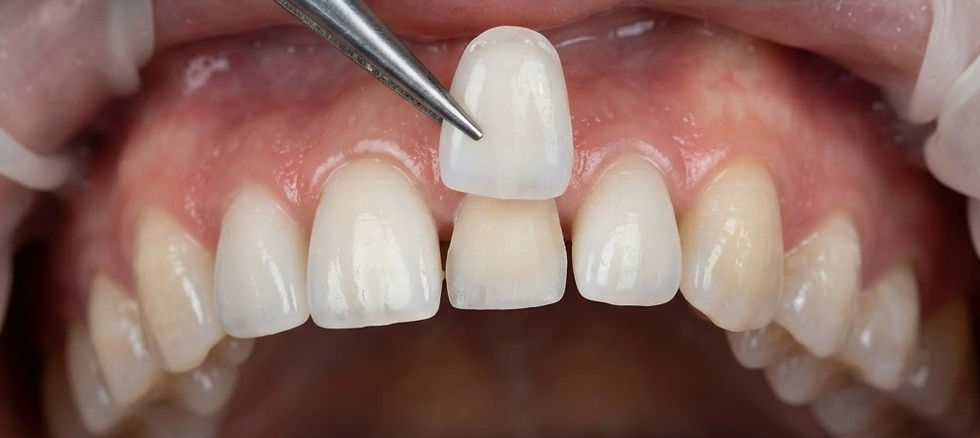
Inlay or Onlay?
• Inlay: fits inside the cusps (the raised points) of the tooth, replacing a large filling
• Onlay: covers one or more cusps as well, used when part of the chewing surface is weak or broken
Both are made in a laboratory or milled digitally from a ceramic block, then bonded to the tooth.
Why Choose Ceramic Instead of a Large Filling?
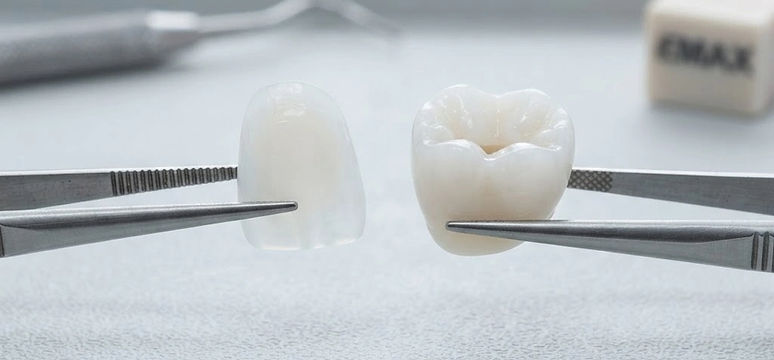
Large composite or amalgam fillings can shrink, crack or leak over time. A ceramic inlay or onlay is made outside the mouth with an exact fit, is very hard-wearing and matches the colour of the tooth.
Inlays and Onlays vs Crowns
A crown covers the whole tooth and needs more preparation. When enough healthy tooth remains, an onlay protects the weak parts while keeping the rest. This is the more conservative choice.
How the Treatment Works
Step 1. The old filling or decay is removed under local anaesthesia.
Step 2. The tooth is scanned digitally and a temporary filling is placed.
Step 3. The ceramic restoration is designed and made.
Step 4. It is tried in, adjusted and bonded permanently. This fits within the usual two-visit schedule of a veneer or crown trip.

How Long Do They Last?
With good hygiene and check-ups, ceramic inlays and onlays can last many years. A night guard is recommended if you grind your teeth.
In Your Treatment Plan
Old large fillings on back teeth are often replaced with inlays or onlays during a smile makeover or full mouth reconstruction. Send your 5 dental photos and any X-rays on WhatsApp for your plan.
Frequently Asked Questions
Are inlays and onlays better than fillings?
For large cavities, usually yes: they are stronger, fit more precisely and are more durable than large direct fillings.
Do they look natural?
Yes. Ceramic is tooth-coloured and can be matched to your natural teeth.
Can they be done in one trip?
Yes, they normally follow the same two-visit schedule as veneers and crowns.
Have old fillings that keep breaking? Send your photos and X-rays on WhatsApp for advice.
REQUEST A QUOTE
