

Composite Veneers in Istanbul, Turkey
Composite veneers are made from tooth-colored resin that is shaped directly on your teeth, usually in one visit and often without removing enamel. They are a quicker, lower-cost way to improve a smile, but they do not last as long as porcelain. This page explains when composite veneers make sense and when E-Max porcelain is the better choice.
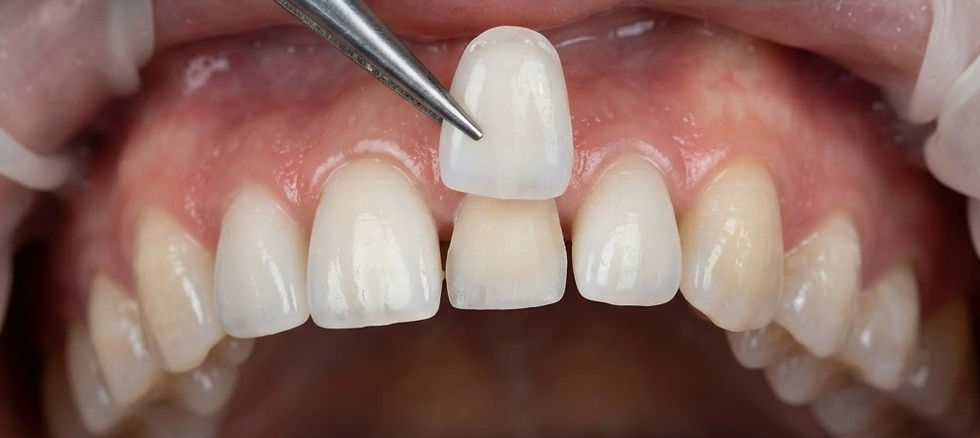
What Are Composite Veneers?
Composite veneers, also called direct or bonded veneers, are layers of composite resin applied to the front of the teeth. The dentist builds up each tooth by hand, shapes it, cures it with a light and polishes it to a natural shine.
Because no laboratory is needed, a set of composite veneers can often be completed in a single appointment or over two consecutive days.
Who Are Composite Veneers Good For?
• Small chips, short or worn edges
• Small gaps between front teeth
• Mildly uneven tooth shapes
• Younger patients who want to avoid removing enamel
• Patients who want a reversible or lower-cost improvement
Composite veneers are less suitable for very dark teeth, heavy grinders, or patients who want a result that lasts as long as possible with minimal maintenance.
Composite vs Porcelain Veneers
Look
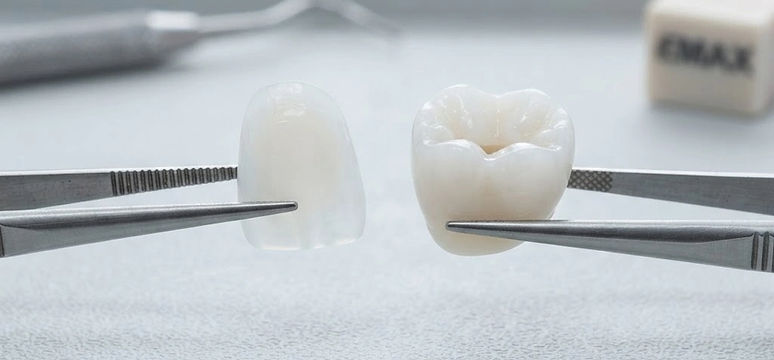
Porcelain and E-Max ceramic are more translucent and lifelike. Composite can look very good when freshly polished but tends to lose its shine over time.
Staining
Composite absorbs stains from coffee, tea, wine and smoking. Ceramic resists staining.
Durability
Composite chips more easily but can be repaired in the chair. Porcelain is harder and lasts longer but must be replaced if it breaks.
Enamel
Composite usually needs little or no preparation. Porcelain may need some, although no-prep and laminate veneers keep enamel removal to a minimum.
For a full comparison of ceramic options, see our porcelain and laminate veneers page.
How Long Do Composite Veneers Last?
Composite veneers typically need polishing every year or two and renewal after around 4 to 7 years, depending on your habits and hygiene. Avoiding smoking, cutting down on staining drinks, wearing a night guard if you grind and keeping regular cleanings all extend their life.

Composite Veneers vs Composite Bonding
Composite bonding usually means fixing one or two teeth, for example a chipped edge or a small gap. Composite veneers cover the whole visible surface of several teeth to change the overall smile. The material is the same; the scope is different. Read more on our composite bonding page.
Getting a Plan Before You Travel
Send 5 photos: front smile, side smile, upper teeth, lower teeth and your bite. X-rays are helpful if you have them. We will tell you whether composite will give you the look you want, or whether porcelain veneers or another treatment would suit your teeth better.
Frequently Asked Questions
Are composite veneers worth it?
They can be, for small changes, younger patients or a lower budget. If you want a long-lasting result that resists staining, porcelain or E-Max veneers are usually the better long-term choice.
Do composite veneers damage your teeth?
Composite veneers usually need little or no enamel removal, so they are one of the most conservative options. They can be removed or replaced later without major changes to the tooth.
Can composite veneers be whitened?
No. Composite does not respond to whitening. Whiten your natural teeth first if you want a lighter shade, then the composite is matched to the new color.
How many days do composite veneers take?
Because they are made directly on the teeth, composite veneers are often finished in one long appointment or over two days. Your plan confirms the time needed for your case.
Can I switch from composite to porcelain veneers later?
Yes. Many patients start with composite and change to porcelain veneers later. Your dentist removes the composite and plans the ceramic veneers on the natural tooth.
Not sure which type is right for you? Send your 5 photos on WhatsApp, or read our main veneers in Istanbul guide.
REQUEST A QUOTE
