

Porcelain and Laminate Veneers in Istanbul, Turkey
Porcelain veneers are thin ceramic shells bonded to the front of your teeth. They change color, shape and proportion while keeping a natural, translucent look. At our clinic in Şişli, Istanbul, most porcelain veneer cases are planned with E-Max lithium disilicate ceramic. Every patient receives a personal plan, not a standard package.
What Are Porcelain Veneers?
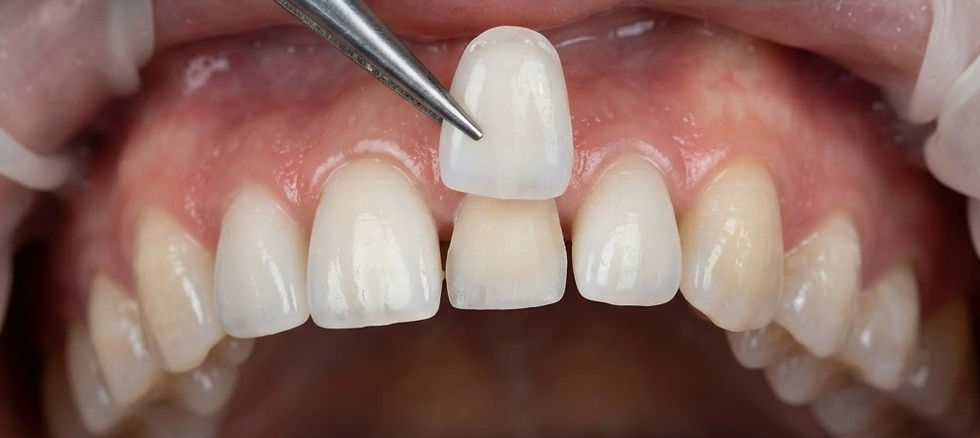
“Porcelain” is the everyday word for dental ceramics. A porcelain veneer is a custom shell, usually between 0.3 and 0.7 mm thick, that covers the visible surface of a tooth. Because ceramic lets light through in a similar way to enamel, it looks more lifelike than resin and keeps its color for years.
Porcelain veneers are used for discolored teeth that do not respond to whitening, worn or chipped edges, small gaps, uneven shapes and mild cosmetic misalignment.
Laminate Veneers: The Thinnest Option
Laminate veneers are the thinnest type of porcelain veneer. In Turkey you will often see the terms “laminate veneer”, “E-Max laminate” and “porselen lamina” used for the same treatment.
Because they are so thin, laminates need little enamel reduction and sometimes none at all. They suit teeth that are already well aligned and need only a change of color, length or shape. They are not a good fit for teeth that are crooked, very dark or heavily filled.
If you are interested in keeping as much enamel as possible, see our page on no-prep veneers.
E-Max vs Feldspathic Porcelain
E-Max (lithium disilicate)
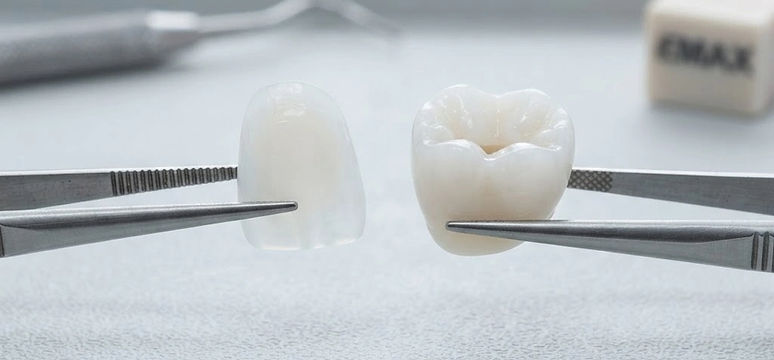
Pressed or milled ceramic with high strength for its thickness and a natural translucency. It is the most common choice for front-tooth veneers today and is the main material we use.
Feldspathic porcelain
Layered by hand by a ceramist. It can be extremely lifelike but is more fragile and more technique-sensitive. It is used less often.
Zirconia
Very strong but more opaque. It is usually better for crowns on back teeth than for thin front veneers. Read our E-max vs zirconia guide for the full comparison.
How Porcelain Veneers Are Made and Fitted
• Examination of teeth, gums and bite, with X-rays when needed
• Digital smile design and, where suitable, a trial smile on your own teeth
• Conservative preparation under local anaesthetic, only where space is needed
• Digital scan or impression sent to the dental laboratory
• Try-in to check fit, shape, shade and bite
• Adhesive bonding, bite check and aftercare instructions
Ceramic veneers need laboratory time, so there are working days between preparation and bonding. Your personal plan tells you how many days to stay in Istanbul.

How Long Do Porcelain Veneers Last?
Well-made porcelain and E-Max veneers often last 10 years or more with good care. The most common reasons for problems are grinding, biting hard objects and gum disease. Brush twice a day, floss daily, wear a night guard if you grind your teeth and keep regular check-ups at home.
Porcelain Veneers vs Composite Veneers
Porcelain veneers look more natural, resist staining and last longer. Composite veneers are made from resin directly on the tooth: they cost less and are easy to repair but stain and chip more and need renewal sooner. See our composite veneers page if you are comparing both.
The right choice depends on your teeth, your budget and how long you want the result to last. Send 5 photos (front, side, upper teeth, lower teeth and bite) and we will tell you which option suits your case.
Frequently Asked Questions
Are porcelain veneers and laminate veneers the same?
Laminate veneers are a thin type of porcelain veneer. All laminates are porcelain veneers, but not all porcelain veneers are laminates. Laminates need little or no enamel removal and suit teeth that only need a small change.
Is E-Max a porcelain veneer?
Yes. E-Max is a lithium disilicate glass-ceramic. It is often called a porcelain veneer and is the most common ceramic for front-tooth veneers because it combines strength with a natural, translucent look.
Do porcelain veneers stain?
The glazed ceramic surface resists staining from coffee, tea and wine much better than natural teeth or composite. The edges and your natural teeth can still stain, so good hygiene and regular cleanings matter.
How thin are laminate veneers?
Laminate veneers are often 0.3 to 0.5 mm thick, about the thickness of a contact lens. The exact thickness depends on how much the shade or shape needs to change.
How much do porcelain veneers cost in Istanbul?
The cost depends on how many veneers you need, the ceramic used and any treatment needed first. We do not publish a fixed price list. Send 5 photos and we prepare a personal plan with the cost before you travel.
Send your 5 photos on WhatsApp for a free porcelain veneer plan, or read our main veneers in Istanbul guide.
REQUEST A QUOTE
